
The artwork
About this artwork
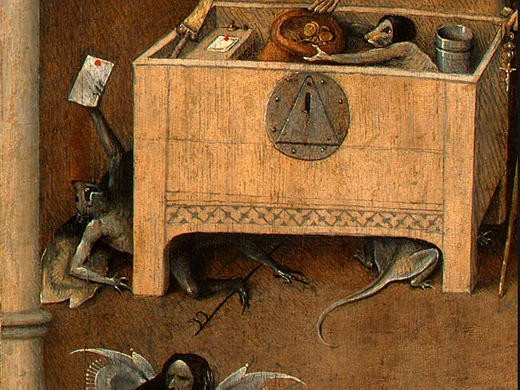
A wooden chest stands prominently in the lower foreground, featuring a central triangular lock and carved, geometric decorative banding. Beneath the chest, a gray creature with a tail and clawed feet crouches in the shadows, while to the left, another dark, spindly figure reaches upward, holding a piece of paper aloft. A third figure, partially visible inside the chest, extends a hand to offer a sack filled with coins toward the exterior. The lighting is low and even, emphasizing the warm, muted brown tones of the floor and the sturdy, pale wood of the container. The paint is applied with precision, detailing the texture of the grain on the chest and the subtle, gnarled anatomy of the surrounding creatures.
This detail belongs to the lower section of a larger allegory on the sin of avarice, attributed to Hieronymus Bosch and dated to approximately 1485-1490. The scene captures a figure, recognized as an earlier version of the miser, depositing coins into a demon's sack while simultaneously holding a rosary in a contradictory display of piety. The imagery draws heavily upon 15th-century Ars moriendi texts and woodcuts concerned with the 'Art of Dying Well.' It functions within the memento mori tradition, serving as a stark reminder of the spiritual danger posed by material attachment.
The panel is currently held at the National Gallery of Art in Washington, D.C. It is known that this work was originally part of a larger triptych, though the central panel has since been lost. Bosch utilizes these grotesque, hybrid figures to externalize the internal struggle between salvation and worldly greed. By placing the act of hoarding within the same frame as religious devotion, the artist highlights the moral conflict of the miser, caught between the influence of celestial guidance and infernal temptation.
Provenance & details
- Date created
- 1485–1490
- Art movement
- Northern Renaissance
- Subject / genre
- Allegory
- Original collection
- National Gallery of Art, Washington, D.C.
- Available formats
- 183 museum-grade canvas, paper & framed editions
In the room
Gallery-worthy quality, made for you
Each print starts with an artist's original work. We use materials like quality paper, acrylic, and canvas that hold up over time, because art shouldn't be disposable.


Art Visualizer
See it on your own wall
Upload or take a photo of your room to view Death and the Miser at true-to-life scale before ordering.
Size & craftsmanship
Sizing, framing & delivery
Death and the Miser is custom-printed to order in its landscape proportion using archival water-based inks on museum-grade paper, cotton-blend canvas, or brushed aluminum. Produced locally in 2–5 business days with worldwide tracked shipping.
Common sizes, drawn to scale in this painting's landscape orientation. Every painting page lists all the sizes it comes in.
Same artist
Find more by Hieronymus Bosch

Same movement
Discover more in Northern Renaissance


Same museum
More from National Gallery of Art

Customer reviews
Hear from our happy customers
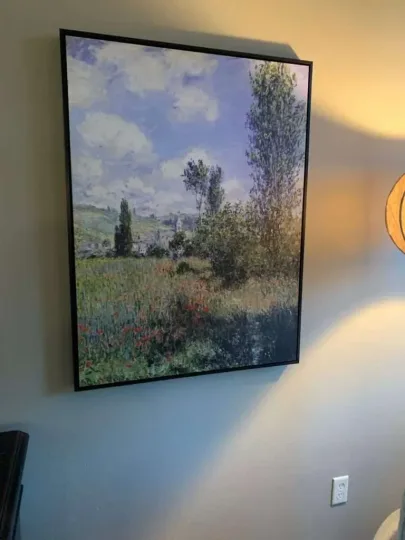
The art was packed very well and arrived sooner than expected. It is truly beautiful.
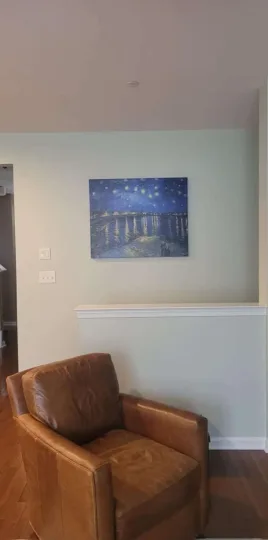
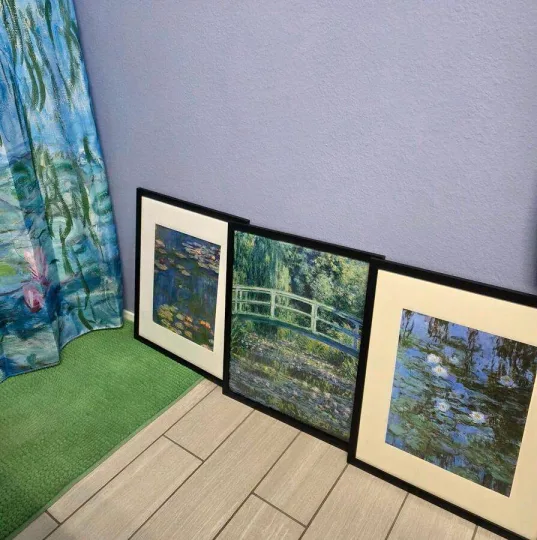
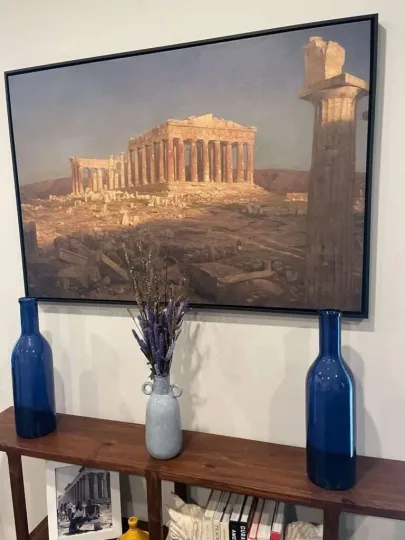

Straight forward transaction and the painting is as described! Color is almost dead on the picture. Love them.
Flexible options
Available in multiple sizes and premium finishes, each piece can be customized to perfectly complement your space and aesthetic vision.
Archival quality
Professional-quality prints using fade-resistant inks and archival materials that preserve color and detail.
Worldwide delivery
Fast, reliable shipping with full tracking to your doorstep, wherever you are in the world, ensuring your artwork arrives safely.
Fair pricing
Art transforms everyday moments. We believe everyone deserves beautiful art prints at honest prices.